This week I returned to Nightmare Magazine to read the short story “Spore,” which was published in a female Lovecraftian horror anthology. You can read it for free here...
“Spore” was a quick read, and I was interested in the premise of a purported fungal infection that is influencing its hosts in strange and unanticipated ways. I’ve thought of including some sort of magical fungus in the sequel to The Gold in the Dark, so I’m always psyched to see tangential ideas in fiction.
The language in this piece is really beautiful. Settings are detailed in a way that makes the piece come to life.
Condensation drips through the weave of the metal table onto the pavement. People pass us on the sidewalk, bright summer colors and chattering voices. Hands touch arms to punctuate conversation; shoulders brush; a couple rests their hands in each other’s back pockets.
I do wish we’d been given more of a glimpse into the further aftermath of ingesting the mushrooms, especially in terms of further physical effects and mental urges. I also don’t get a Lovecraftian feel from the piece, despite the anthology it’s housed in.
Nevertheless, I liked the detail-work in the piece and the MC’s personal struggles with her own personality as it relates to belief, so I’d recommend this story.
Those of you who have been around a while might know that I’m on a quest of sorts to get to know the romance genre better. I was pretty sure that Eloisa James would be an author whose style I’d like, so with that in mind, I picked up some of her fairy tale-inspired romances.
Oh. My. God. I can’t get enough of them. I never used to really understand the addictive nature of the romance genre, but I get it now. So I thought I’d give some quick reviews for the three I’ve read so far. I will undoubtedly be reading more from James in the near future, and I recommend her books for anyone who is interested in the genre but isn’t exactly sure where to start. Just so you know, these are all very loose fairy tale retellings—they have a fairly whimsical tone and are not at all fantasy.
The Duke Is Mine is inspired by “The Princess and the Pea.” Just like in the original tale, the heroine arrives at a manor one stormy night soaked through to the bone. In James’s version, her destined duke greets her at the door and is immediately wildly attracted to her—a sodden gown clinging to every curve will do that. 😉 Too bad she’s engaged to a simpleton and is really only visiting the duke’s estate as her sister’s chaperone; it’s the sister who is being tested as the possible duchess-to-be.
I really liked this book; the female MC is sassy yet honorable. I’m a sucker for sister relationships in stories, and this one is really cute. It also handles neurological disorders in a sensitive, sensible matter. The duke love interest has an Asperger’s-like disorder, and the MC’s betrothed, who is mentally handicapped due to a temporary loss of oxygen at birth, is depicted respectfully. Out of the three here, I’d say this book is great for a first impression of James’s work.
Once Upon a Tower is of course inspired by the tale of Rapunzel. Of the three books of James that I’ve read, this one is the most “realistic.” The female and male MC are both quite young and sexually inexperienced. The chemistry between them is very strong, but when they get married, their inexperience in the bedroom introduces major tension into the relationship; I don’t know that I’ve ever read a more realistic and raw depiction of a young couple’s sexual struggles. I even read their first unfortunate sexcapade out loud to my husband. His response? “Oh, damn.“
So this is a more serious read than the other two here, and it will really pull at your heart strings. I’d also recommend it to any classical music fans out there; the female MC is an expert cellist, and James has really done her homework in this department.
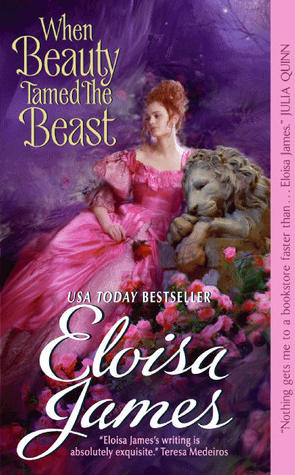
I’m not sure exactly how to put this in a blog-appropriate manner. Umm… When Beauty Tamed the Beast threw me into a strong romantic tizzy. I knew, in a clinical sort of way, that romance books had the ability to do that—but didn’t ever really expect it to happen to me.
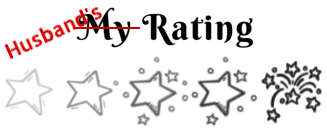
Well, we all get proven wrong sometimes. This is a book that will please female readers and indirectly please their romantic partners. You catch my drift? ;D I’d give this ten out of five stars if I could.
Have you read any great romance books lately? Do you tend more towards contemporary, historical, or paranormal? Leave your recommendations down below!
This week I returned to Tor.com and read “More Real Than Him” by Silvia Park. I’m loving how there are so many works that have been released lately with a Korean pop culture thread. (Hart & Seoul is waiting for me in my ARC pile as I type this!) You can read the short story for free here…
I really enjoyed this short story; it was a fun, quick read. The premise is that a young woman works as a programmer at a robotics company and drunkenly steals a robot from her company one night. She’s a mega-fan of a Korean actor; saddened by the news that he has enlisted in the mandatory two-year military service, she decides to craft the robot in his likeness, modeling its personality after the actor’s famous roles.
This is a great story for any fans of Black Mirror or Ex Machina. It delves into the endless philosophical questions revolving around AI and robot-human relationships. At what point is AI living? How do humans stay “socialized” in a world where robots are an easy band aid for companionship? What’s the fallout when robots are indistinguishable from humans? And so on and so forth.
The story flowed well, with some really lyrical language, and the underlying themes of the piece are fascinating. I’d recommend it for anyone who has an interest in Asian culture and sci-fi.
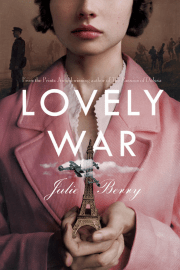
This is one of those books with a cover that just called to me. (It’s also one of those covers embracing the white-uppercase-sans-serif-with-stuff-over-it trend.) But still, I went into Lovely War a bit trepidatious—I’m not the biggest historical fiction fan, and I spent a good portion of my time in school history classes daydreaming about being elsewhere.
Well, there was no reason to fear; this book swept me off my feet in a major way. I’d heard some people be confused about the premise, and it is a bit odd, I’ll agree. The book starts off in World War Two times with Aphrodite—yes, the Aphrodite. She, along with some of her other friends from the Greek pantheon, narrates a gripping story from World War One about the intersection of love and war to her aggrieved husband, Hephaestus. He’s caught her cheating on him with Ares, and Aphrodite knows exactly the right tale to tell to explain the situation.
I’ll admit that the Greek god framework does feel a little bit like the leaning tower of Pisa; it’s upright, but some tugging this way or that would cause the whole thing to topple over. However, the love story Aphrodite spins for Hephaestus and the readers is one for the ages. This is a captivating tale that literally moved me to tears, and that is a true once-in-a-blue-moon happening. Berry’s narration is gorgeous; quick chapters and lovable characters will have you make quick work of this 480-page tome.
I’d argue that this is another case of “is it really YA?” (Hmm, sounds like an interesting game show.) It’s certainly being marketed in the YA section, and the tone is perfect for the YA crowd, but the main characters are older as far as I can tell. I’m not exactly sure what their ages were, to be honest—maybe it was mentioned, but I certainly missed it, so I’d guess they’re somewhere from eighteen to early twenties. (“Maybe,” hisses my inner conspiracy theorist, “Berry purposely didn’t mention the main characters’ ages so we can’t get into this whole debate again!”)
Anyway, a good book is a good book, so maybe we should just get past the whole is-it-or-isn’t-it question. I wholeheartedly recommend Lovely War, and I dare you to read it without getting watery in the eyes.
This week I took a detour from the usual weird short fiction and went back to a classic. I think the last time I read “To Build a Fire” was in middle school English—I have distinct memories of some of the kids in class thinking the expression “like a chicken with its head cut off” was just hilarious. You can read the short story for free here…
I really enjoyed this short story! If you’ve never read it, the premise is that a man and his dog are traveling through the Yukon in temperatures of seventy-five below. The MC is quite arrogant, and his actions lead him to have problems starting a fire. It’s a classic man versus nature tale, where you’re just waiting for the foolhardy MC to get his comeuppance. I already knew what was going to happen, so basically just spent the first bit waiting for everything to go to pieces.
Really I read this because I’ve been working on my WIP, and the MC confronts a dangerous blizzard early on in the book. It’s nice to see how a master storyteller like London tackles a similar topic, in terms of the observations and details. It was also just a nostalgic read; this story may be more than a hundred years old, but it definitely holds up, despite one instance of racial language that would never fly in the here and now. Just as I’m not going to dismiss Lovecraft for the infamously named cat in “The Rats in the Walls,” so too am I not going to dismiss London. Hope that makes sense, though others might feel differently.
Anyway, I recommend this short story and had a fun time reading it, even though it’s very different from the other short fiction I’ve been reading lately. It’s the kind of short story that really sticks with you once you’ve read it, so for that I can only give it five stars. 🙂
Thank you to NetGalley and Crown Publishing for sending me a free advanced reader copy of this book for an honest review. The Warehouse debuts August 20th.
Let’s cut to the chase: this is a book about Amazon. If you’ve ever entertained the question of what the world would look like if Amazon continues going great guns and secures a bit more political power, then this is a must-read. This is a near-future dystopia, where devastating global warming and Black Friday massacres have ensured that consumers are unwilling to leave their houses—basically ever. Enter Cloud, who will drone-ship every product imaginable to your doorstep in the blink of an eye. Their workers live in massive company towns, where you get paid in Cloud credits, eat Cloud burgers, and sleep in Cloud-issued apartments. And if you don’t want to buy into the system, too bad, because unemployment is sky high, so how else you gonna make a buck, bro?
Enter Paxton and Zinnia, two new recruits to Cloud. Paxton is an entrepreneur whose small business dreams were squashed under the weight of pressure by Cloud to lower his production costs. Zinnia is a corporate spy on the most dangerous mission of her life: to figure out how Cloud is really producing their energy. Paxton has a job on the security team, while Zinnia only manages to secure a lowly picker role. If you have any sort of plot intuition, you can kinda see where things are headed from there, and it’s a wild, compulsive read that was hard to put down.
Listen, I like Amazon well enough. To give a personal example, my book is on Amazon in the KDP program, and I truly admire the innovation they have brought to the publishing industry by introducing the Kindle and an ebook marketplace to the world. Believe it or not, at least in the publishing sphere, Amazon has been great for the little guy. Print-on-demand and easy ebook distribution are threatening to topple the long-established gatekeepers of publishing, i.e., agents and publishers, allowing authors to be their own boss and have total control over their final product.
But that’s not to say that everything Amazon does smells of roses; you don’t get to that level of success without trampling over others. So if you’re a fan of dystopian fiction, I would definitely pick this up—it’s a fast, thrilling read that will ironically probably be topping Amazon’s book rankings.
So some of you may not know this, but I majored in Chinese language and literature in college and I’ve actually spent a lot of time in China. I no longer have a day job that requires me to use Mandarin, so I’m growing rustier by the day, but suffice it to say that I know a lot about the Chinese language and culture. Lo and behold, this story has a lot of Chinese songs and poems interspersed throughout, along with many details that draw upon Chinese culture, so this added a fun element to the piece for me. I will say, though, that some translations for the Chinese text could go a long way in bridging the cultural gap for an English-speaking audience. I can understand not including a translation for a language with many English cognates, such as Spanish or French, but Chinese is decidedly not that.
I ultimately had a difficult time connecting with this story. It’s another one of those short stories where there is a ton of worldbuilding, but in the “thrown in the deep end of the pool” style. In media res-style details are tough enough in longer works, let alone in short fiction. All the details, with very little seeded explanation, made the whole narrative feel ungrounded. I also think this would be a doubly challenging story for readers who do not have any sort of background in Chinese; there are no translations provided for the Chinese text, and many Chinese cultural and historical touchpoints are thrown in without explanation. For example:
Only the starmages have the ability to defeat the Starmage General. But their suits have a limiter that stops them from performing the Seventy Two Transformations, and that is under the Starmage General’s control.
In the above quote, this was the first time I was hearing anything about the “Seventy Two Transformations.” In fact, this is the only time the transformations are mentioned in the entire story. However, a quick Google search revealed that the transformations are performed by a character in Journey to the West, a Chinese literary classic. I happen to think it’s cool that these referential details are included, but a little seeded explanation or context would be appreciated.
I also don’t understand why the author chose to put the whole piece in second POV. It’s a bold move that didn’t seem to add much to the story, and I’m curious to know the rationale behind the decision.
Whew, Short Tuesday has gone on a bit longer than I anticipated! To sum up, this was an interesting read, especially for someone with an interest in Chinese language and culture, but there were many aspects that took away from the story as a whole.
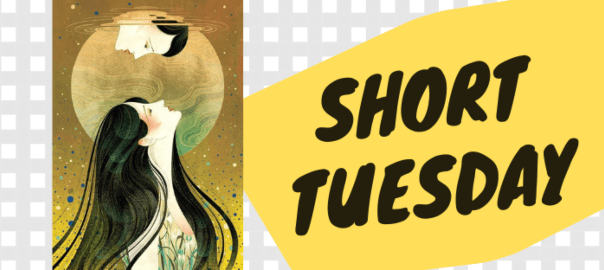
This week I returned to Tor.com to take another look at their original short fiction. “A Forest, or a Tree” by Tegan Moore caught my eye—I mean, how could it not, with that frightful (in a good way) illustration. You can read the short story for free here…
This short story was a fun ride, following a group of girls hiking in the woods. Predictably, one of the girls falls sick and spooky things start happening: the GPS equipment is malfunctioning, a creature is spotted in the woods, one of the girls starts hearing strange noises, et cetera. It’s a story everyone’s seen a million times before, but there’s a reason for that: it’s a universally spooky tale that takes hold of your imagination.
I do think that the author tried to incorporate a bit too many threads into the story. There’s a barely-explored racial element, as well as a shallow conversation about memes and copypasta serving as modern myth. The story also ends pretty abruptly just as circumstances have changed and events are coming to a head—I wanted a more fulfilling conclusion. There were also some small niggling details that brought me out of the story—a character saying twice that her friend needs to stop reading so many “subreddits,” for example (instead of “Reddit posts,” which is how any actual Reddit user would phrase this). So these things bring the story down to three stars for me, but I still found it a fun read.
The premise of “Universal Horror” is a group of friends playing a drinking game on Halloween, where a little mummy trick-or-treater is coming around to the house a few too many times for comfort. Unfortunately, I had a difficult time connecting with this story—the whole thing felt a bit detached. I think that can partially be chalked up to the age and life situation of the characters. They’re grappling with some life changes and don’t seem to know how to handle them—break-ups, “getting old” (we’re talking thirty here), the question of whether or not to have a child. And while they’re trying to come to terms with all the important life stuff, the author is also heaping on a long-kept secret, not to mention the requisite dash of horror. It’s a lot of different threads all smushed together, and I didn’t find that any of the elements were strong on their own or in tandem.
Also, as a woman who’s twenty-nine, I’m not huge on stories about people in my age bracket coming to terms with the fact that they’re proper adults now. So many of these characters strike me as weak, nihilistic, and mopey—maybe that’s why I’m such a fan of YA. 😛 So this story is sadly not my favorite of Nightmare Magazine’s offerings.
Thank you to NetGalley and St. Martin’s Press for sending me a free advanced reader copy of this book for an honest review. The Escape Room debuts July 30th.
Escape rooms—barely a thing five years ago, it turns out that friends and families really like to feel like they’re participating in a warm, friendly, Saw-like experience. (I kid—escape rooms are pretty awesome.) So it makes sense that having swept like wildfire across the globe, escape rooms have also infiltrated the subscription box business, graced the silver screen, and, at last, crawled their way into publishing.
The premise of the book is great—a bunch of investment bankers are lured to an elevator escape room, only to find out that the corporate team-building exercise they were promised is not what it appears to be. Yet great premises don’t necessarily make great books. A skillful writer could do a lot here, but the writing got in the way of the story at every turn. Each page was filled with wooden language and plodding narration. This is a real “I did X. Then I did Y. Then I did Z” experience, to the extent that there are actually a surprisingly small amount of detailed scenes in the book, given how zoomed-out our literary camera lens is. And when we do get some details, they always seem like the wrong thing. I don’t know how many descriptions of expensive investment banker wardrobes there were in this book, but it had to be… ten? Twenty? Fifty? Meanwhile, all you want is more cool escape room details, but it felt like there were only five clues to the whole room. For the vast majority of their time in the escape room the bankers just sit there, waiting to be let out.
I will say that I appreciated the back-and-forth POV chapter switches from first to third. The third person sections follow the entrapped bankers, while the first person sections track a rookie investment banker’s experience a few years prior. This variety of POV switching is a bold narrative choice, and with a more honed and experienced voice this could have worked beautifully—but because of the distant point of view, stiff language, constant head-hopping, and lack of escape room intrigue, I found myself dreading the third-person sections.
So I appreciate what this book wanted to be, and I’ll eagerly read a different thriller with an escape room premise. But Goldin’s take on escape rooms unfortunately missed the mark, so I have a difficult time recommending it.









 Katie Jane Gallagher